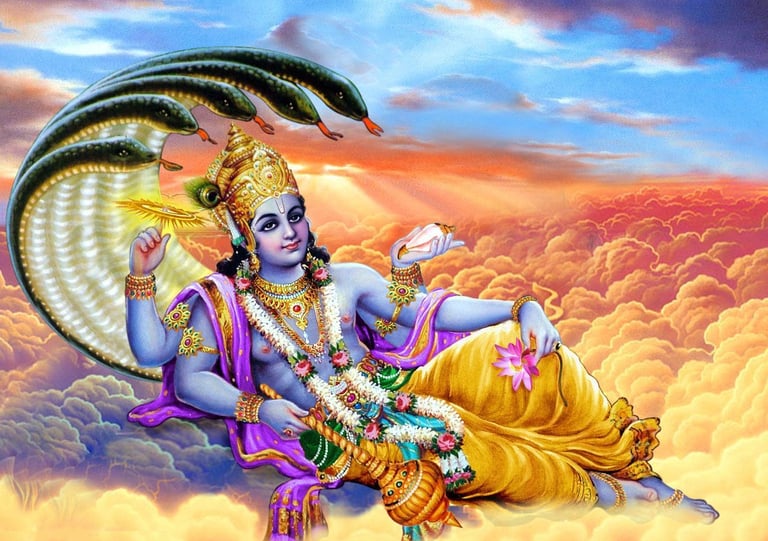
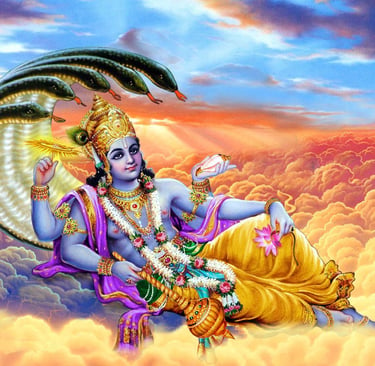
Vishnu is a major deity in Hinduism, specifically within Vaishnavism, where he is revered as the supreme being. He is also known as one of the three main gods in the Trimurti, alongside Brahma and Shiva. Vishnu is considered the preserver and protector of the universe, often depicted as benevolent and peaceful. He is also believed to incarnate (become an avatar) to restore balance and protect dharma when the world is threatened by chaos and evil.
Key Roles and Attributes:
Preserver: Vishnu's primary role is to maintain cosmic order and protect the universe from chaos and destruction.
Avatar: He is believed to incarnate (become an avatar) in different forms to restore balance and protect dharma when necessary.
Vaishnavism: In Vaishnavism, a major branch of Hinduism, Vishnu is considered the supreme being, the absolute truth, and the ultimate reality.
Trimurti: Along with Brahma and Shiva, Vishnu makes up the Trimurti, the Hindu trinity representing creation, preservation, and destruction, respectively.
Symbols: Vishnu is often depicted with blue skin, symbolizing his cosmic and metaphysical nature, and with four arms, holding a conch, discus, lotus, and scepter.
Consort: Lakshmi is Vishnu's consort.
Vishnu or Vishnu Bhagwan is the Hindu god who restores the balance between good and evil. He is the protector of dharma or moral order and proper behavior in Hindu practice. As such, he acts as the guardian mediator to preserve order and truth.
Forms of Vishnu - Lord Vishnu is considered to have 24 Forms namely: -
(1) Keshava (2) Narayana (3) Madhava (4) Govinda (5) Vishnu (6) Madhusudhana (7)Trivikrama (8)Vamana (9) Sridhara (10)Hrishikesha (11) Padmanabha (12)Damodara (13) Sankarshana (14) Vasudeva (15) Pradyumna (16)Aniruddha (17)Hara (18)Adhokshaja (19) Narasimha (20) Achyuta (21) Janardhana (22) Upendra (23) Purushottama (24) Krishna
The 10 avatars of Vishnu is central to Hinduism. It underlines the belief that whenever dharma weakens and evil rises, Vishnu intervenes in the world, taking on a form best suited to address the prevailing imbalance. Each avatar embodies a specific virtue and plays a unique role in the grand narrative of creation, preservation, and destruction. By studying their stories, we gain valuable insights into the core principles of Hinduism and the path to a meaningful life.
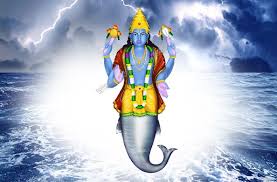
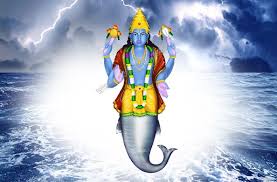
(1) Matsya (The Fish)
In the beginning, a great flood threatened to engulf the world and destroy all life. Vishnu assumed the form of Matsya, a giant fish, and rescued Manu, the first man, and a seed bank from the deluge, ensuring the continuation of life on Earth. Matsya represents a time of complete chaos and destruction, highlighting Vishnu's role as the preserver who safeguards life even in the direst circumstances.
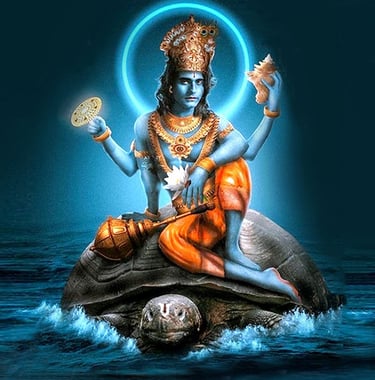
(2) Kurma (The Tortoise)
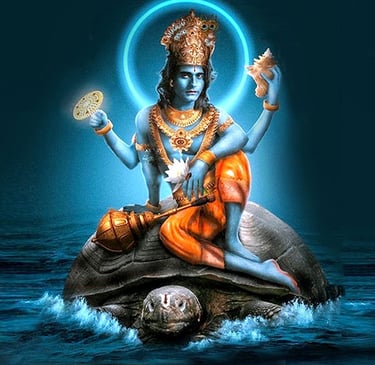
After the flood subsided, the devas and asuras sought to churn the cosmic ocean of milk to obtain the Amrita (elixir of immortality). To provide stability for the churning rod, Vishnu manifested as Kurma, a giant tortoise, using his shell as a base. Kurma embodies stability and unwavering support, a crucial quality for achieving a greater purpose that requires collective effort.
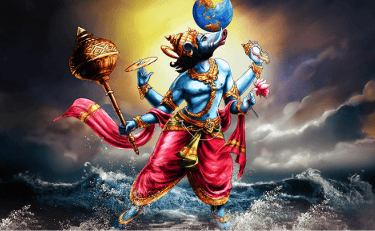
(3) Varaha (The Boar)
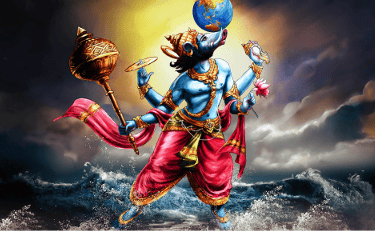
The churning released the Earth goddess Bhudevi, who was imprisoned by a demon named Hiranyaksha. Vishnu took the form of Varaha, a mighty boar, and with his tusks, rescued Bhudevi from the demon's clutches, restoring order to the cosmos. Varaha signifies strength, perseverance, and the power to overcome seemingly insurmountable obstacles.
(4) Narasimha (Half-man, Half-lion)
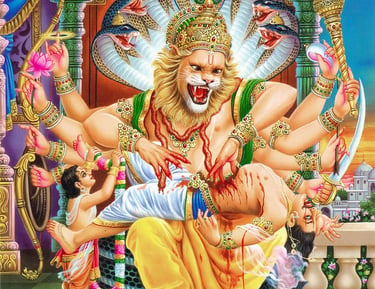
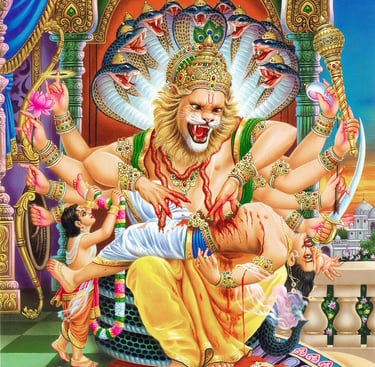
Hiranyakashipu, the demon king and brother of Hiranyaksha, declared himself invincible. His son, Prahlada, remained a devout follower of Vishnu. Enraged by Prahlada's devotion, Hiranyakashipu threatened to kill him. To protect his devotee, Vishnu manifested as Narasimha – a ferocious half-man, half-lion creature – who ripped apart the seemingly invincible Hiranyakashipu, upholding dharma. Narasimha embodies the fierce protection Vishnu offers to his devotees and the swift destruction of evil that threatens righteousness.
(5) Vamana (The Dwarf)
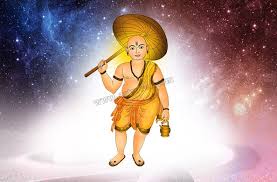
King Bali, a benevolent yet arrogant demon king, ruled the Earth with such righteousness that even the devas were denied their rightful offerings. Vishnu appeared as Vamana, a dwarf Brahmin boy. He approached Bali for a seemingly insignificant boon – three paces of land. Upon granting the boon, Vamana miraculously transformed into a giant, measuring the entire Earth in two steps and pushing Bali down to the underworld with the third, restoring the balance of power. Vamana exemplifies the importance of wisdom and strategic action in restoring dharma, even when faced with seemingly unequal power dynamics.
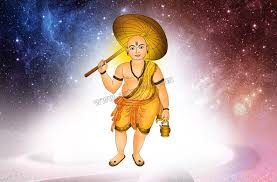
(6) Parashurama (The Warrior)
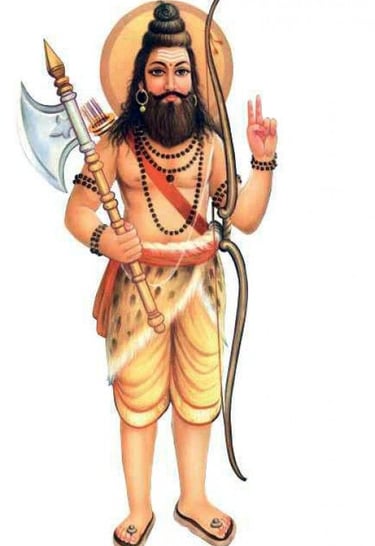
The Kshatriya (warrior) class, once protectors of dharma, became corrupted by greed and power. Vishnu manifested as Parashurama, a fierce warrior wielding an axe. He undertook a mission to purge the Earth of these corrupt Kshatriyas, restoring balance and reminding warriors of their true duty: to uphold righteousness. Parashurama embodies unwavering commitment to justice and the consequences of unchecked power.
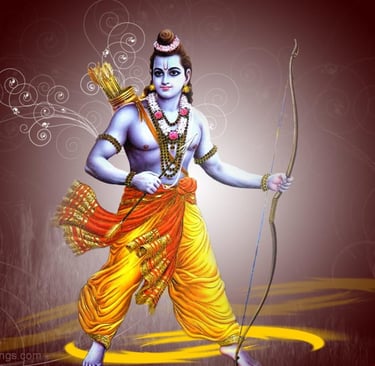
(7) Rama (The Ideal King)
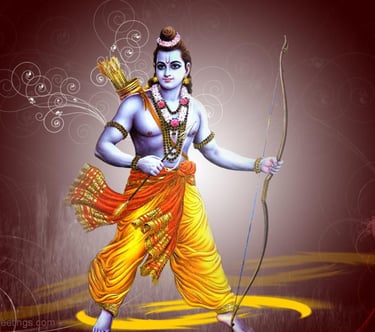
King Dasharatha of Ayodhya, a righteous ruler, faced a dilemma. He had promised his wife Kaikeyi a boon, which she manipulated to exile her stepson, Rama, the rightful heir. Rama, along with his wife Sita and brother Lakshmana, embarked on a fourteen-year exile, enduring hardship and injustice with unwavering virtue. Vishnu incarnated as Rama, the epitome of an ideal king – courageous, dutiful, and devoted to his people. The epic Ramayana chronicles his battles against the demon king Ravana, his unwavering devotion to Sita, and his eventual rise to the throne, establishing a golden age of peace and prosperity. Rama's story underscores the importance of duty, perseverance, and upholding righteousness even in the face of adversity.
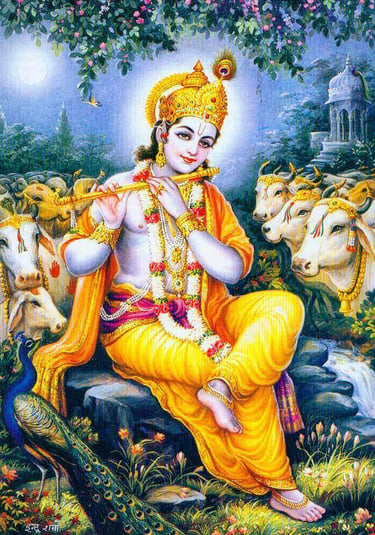
(8) Krishna (The Divine Statesman)
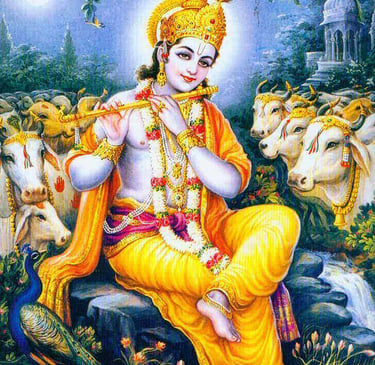
Dwapara Yuga witnessed the rise of the Kauravas and Pandavas, two warring factions vying for the throne of Hastinapura. Vishnu descended as Krishna, the charming and wise charioteer of Pandava prince Arjuna. Through his teachings in the Bhagavad Gita, Krishna expounded on dharma, karma, and the path to liberation. He guided Arjuna through the moral complexities of war, emphasizing the importance of fulfilling one's duty with detachment from the outcome. Krishna's multifaceted personality – playful prankster, wise counselor, and fierce warrior – reminds us of the multifaceted nature of life and the importance of finding balance within ourselves.
(9) Buddha (The Enlightened One)
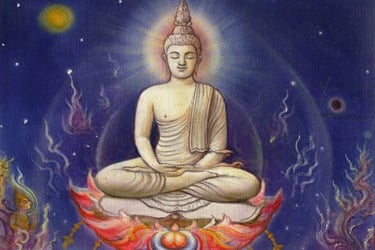
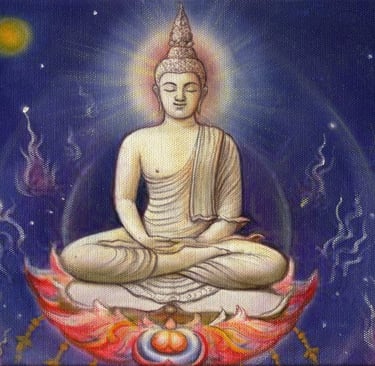
As materialism and ignorance grew, a new path to liberation was needed. Vishnu manifested as the Buddha, the founder of Buddhism. He emphasized the Four Noble Truths and the Eightfold Path, offering a peaceful and introspective approach to attaining enlightenment. The inclusion of Buddha as an avatar underscores Hinduism's acceptance of diverse spiritual paths and the ultimate goal of liberation from the cycle of rebirth.
(10) Kalki (The White Horseman)
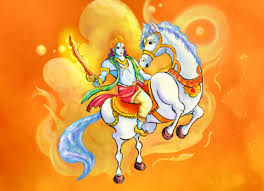
We currently exist in Kali Yuga, the age of darkness and strife. The scriptures prophesy the arrival of Kalki, the final avatar of Vishnu, who will ride a white horse, wielding a blazing sword. He will cleanse the world of evil, ushering in a new golden age of righteousness. The kalki avatar of vishnu represents the hope for a future where dharma will prevail, and serves as a reminder that even in the darkest times, there is always a promise of renewal.
Patna, Bihar, India - 800001
Reuniting Sanatanis
Address:
Technical Support: admin@reunitingsanatanis.in
Blog & Information: editorial@reunitingsanatanis.in G-mail Support : reunitingsanatanis@gmail.com
Uniting hearts through Dharma, Bhakti, Stutis, Mantra, Knowledge, Guidance, Tradition & Trust.
Contact Us:
© 2025 Reuniting Sanatanis. All rights reserved.